


The following is a translated case study from our Japanese office. We have many amazing client stories and this is one of my favorites because it illustrates so well the philosophy that we have seen drive real results for our customers. We see it often in the Japanese market because of the mindset at a cultural level but our most-successful Western clients operate the same way.
The mindset I’m referring to is an operations mindset. Due to the rate of constant change in our industry, there is a strong manifestation of shiny object syndrome. This does create a certain dynamism and speed of innovation but a lot gets lost in the shuffle. What I have always appreciated about our most successful client teams is that they take the time to really build a repeatable and scalable operation with our data. This is the number one piece of advice I could give to any team, regardless of toolset. The case study below provides a lot of actionable advice on this topic.
One piece of feedback we heard during this interview really stuck out to me (I paraphrase):
“Yes, we like DemandMetrics. But even more than saying we like it, it has become so core to our business that we’re way beyond talking about whether or not we like it. It’s just a part of our overall operations.”
I hope you enjoy.
Case Study with SMS Co., Ltd.
In this article, we interviewed SMS Co., Ltd. (hereafter “SMS”), a company that strategically develops multifaceted businesses across four domains where demand continues to grow in a super-aging society. We introduce how SMS positions SEO within the organization, their team structure, and how they utilize DemandMetrics.
What stood out through this interview is that SMS views SEO not as a standalone initiative, but as a foundation supporting user understanding and business value enhancement. Data utilization centered on DemandMetrics is a critical element for translating that philosophy into concrete operations.
Recommended for those with these challenges
- Exploring how to operationalize SEO as a team
- Struggling with how to visualize data across multiple sites and large query volumes
- Unsure how to leverage visualized data for internal decision-making and initiatives
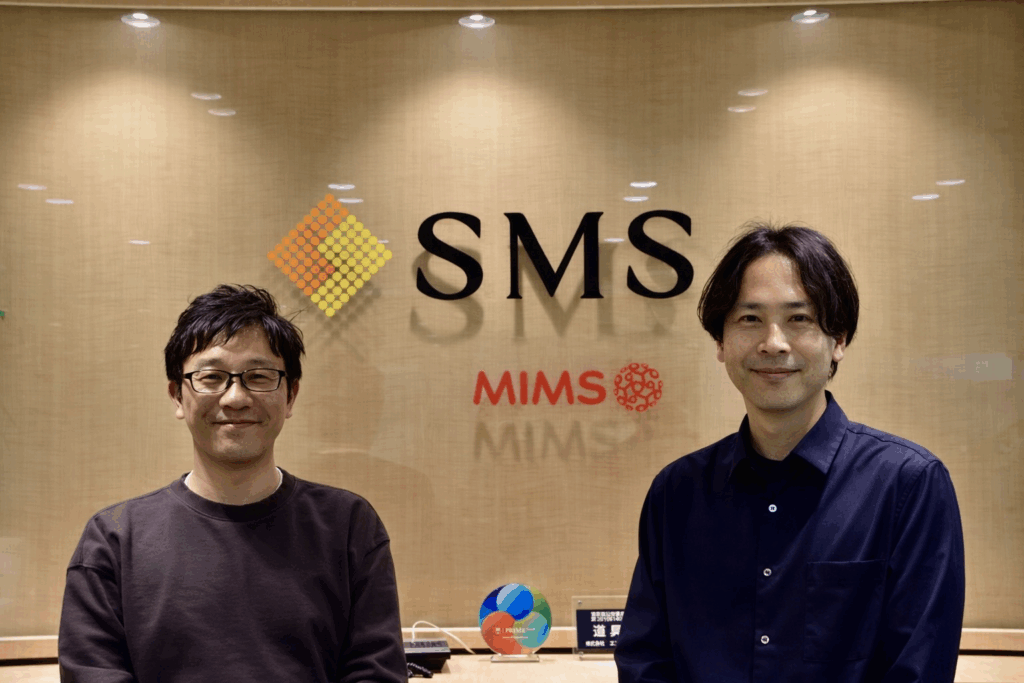
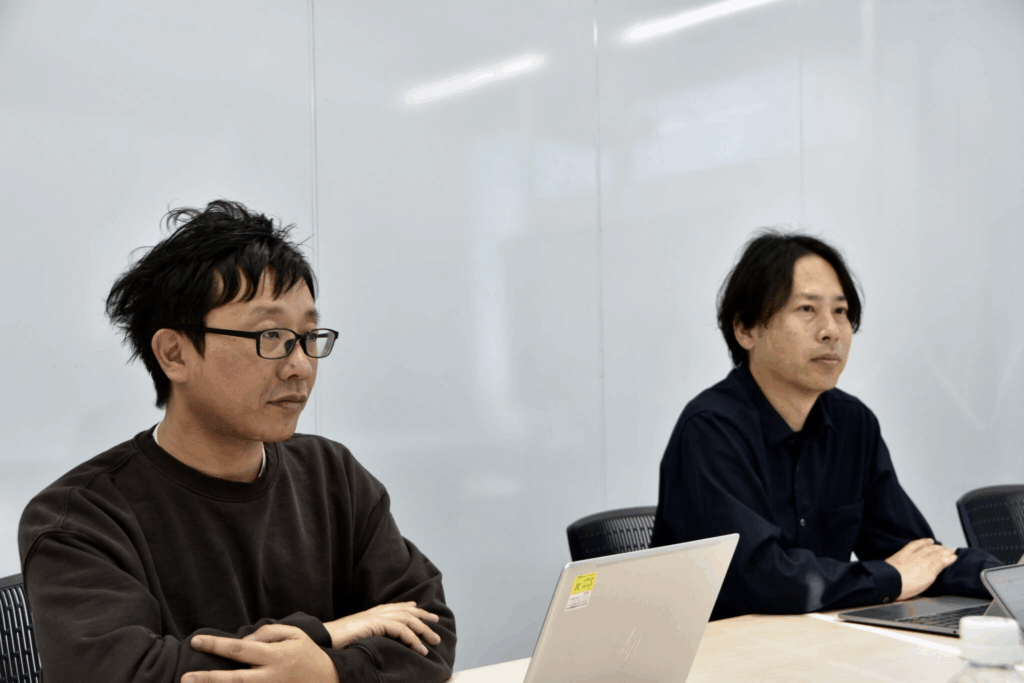
Photo: From left, Mr. Tada from the BPR Promotion Division, EA Promotion (responsible for data infrastructure), and Mr. Sato, Group Leader of the SEO Promotion Group, Marketing Promotion Division, Care/Childcare/Disability Welfare Career Business Division
SMS’s Business Domains and Strengths: Continuously Addressing Social Issues
SMS operates under the mission of “improving people’s quality of life and continuing to contribute to society by building information infrastructure suited to an aging society,” developing businesses across four domains: healthcare, nursing care/disability welfare, health care, and senior life.
The company operates multiple specialized sites across each domain, with career support services centered on nurses and care workers being particularly prominent in the healthcare and nursing care sectors. Of approximately 40 services and products company-wide, about 20 sites fall under the career business.
“Our company’s mission is to solve and support the challenges of an aging society from a broad perspective. SEO is an indispensable element for building information infrastructure and concretely realizing our social contribution,” says Mr. Tada from EA Promotion.
Not Letting SEO End as “Just One Person’s Initiative” — SMS’s Cross-Organizational Shared Philosophy
SEO is positioned as a critical initiative at the core of customer acquisition. Its importance is equally high across the approximately 20 career business sites where Mr. Sato works (including Wellme Job, Nurse Senka Tenshoku, Kaigo Job Agent, Hoikushi Jinzai Bank, and others). On this point, Mr. Sato of the SEO Promotion Group shared:
“For us, SEO isn’t just an initiative aimed at ranking higher in search results. What matters is that users can reach the information they truly need without confusion, and gain satisfaction and a sense of reassurance there. When such user experiences lead to trust and action, and ultimately manifest as business results like revenue and profit — that’s when SEO truly demonstrates its value in a business company.”
Mr. Tada from EA Promotion added:
“Rather than making short-term fixes in response to Google’s algorithm changes, we believe it’s important to accurately provide the information users are seeking. Our approach is that rankings and traffic follow as a result of an essential, sustainable SEO strategy focused on users’ decision-making as the goal.“
What’s distinctive about this approach is that SMS positions SEO not as one part of marketing initiatives, but as a business foundation rooted in user experience. This philosophy is shared as common understanding from management to frontline teams, and even technical metrics like page speed and crawlability are discussed at the executive level.
Because there is an environment where expertise can be leveraged as a company-wide priority, both Mr. Sato and Mr. Tada noted that this philosophy was already pervasive within the company when they joined SMS several years ago.
Regarding organizational structure, another distinguishing feature of SMS is that they don’t just assign SEO representatives to each property — they also maintain a cross-functional support system. Mr. Sato stated, “Rather than completing SEO initiatives within each site, if we don’t share successes and failures across teams, we can’t increase SEO reproducibility as an organization.”
One example cited was a monthly internal SEO Lightning Talk session for sharing success stories and challenges. “Each property is at a different growth stage, but there’s much we can share in terms of approach and decision-making frameworks. SEO skill levels also vary among members, so by regularly having short discussions, a mechanism for accelerating individual growth emerges,” Mr. Sato added.
SEO is also not solely the domain of marketing — it’s closely integrated with product and engineering as well. “A shared understanding of the importance of technical SEO across departments strengthens organizational execution. Technical topics like page speed and site architecture are naturally discussed with management and development teams in the context of SEO,” Mr. Sato reflects. The fact that SEO functions as a shared language connecting departments is a key element supporting SMS’s organizational structure.
Within this framework, DemandMetrics is utilized as the foundation for understanding SEO data and supporting decision-making. Mr. Sato described it as “less of a specialized analysis tool and more of infrastructure that you naturally open every day, enabling you to quickly notice anomalies and changes.”
Below, we introduce three specific areas of utilization.
1. Starting from Looking at the Same Data: DemandMetrics Custom Dashboard Operations
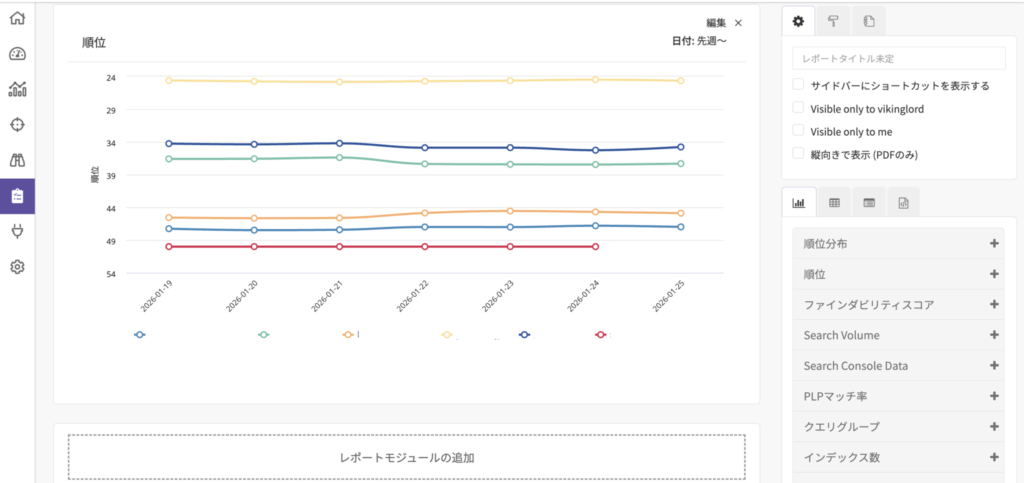
Image: The custom dashboard, one of the DemandMetrics features utilized by SMS
Representatives for each property routinely check DemandMetrics’ reporting features, continuously monitoring ranking trends and visibility for hundreds of thousands of registered queries. Mr. Sato says, “In regular meetings, conversations always start with looking at DemandMetrics data.” Rather than verbally explaining numbers and situations, they believe it’s important to discuss while looking at the same screen to align team understanding.
As part of this, they “use DemandMetrics custom dashboards in a standardized format.” The purpose is to visualize performance differences and structural issues across properties, making it easier to prioritize improvements. Currently, it’s also used by department heads and managers to get a bird’s-eye view of trends across properties beyond their own responsibility.
This was the most impressive point for the author, Customer Success representative Inoue.
2. Aligning “What to Look At” — Operations Design Supporting DemandMetrics Utilization
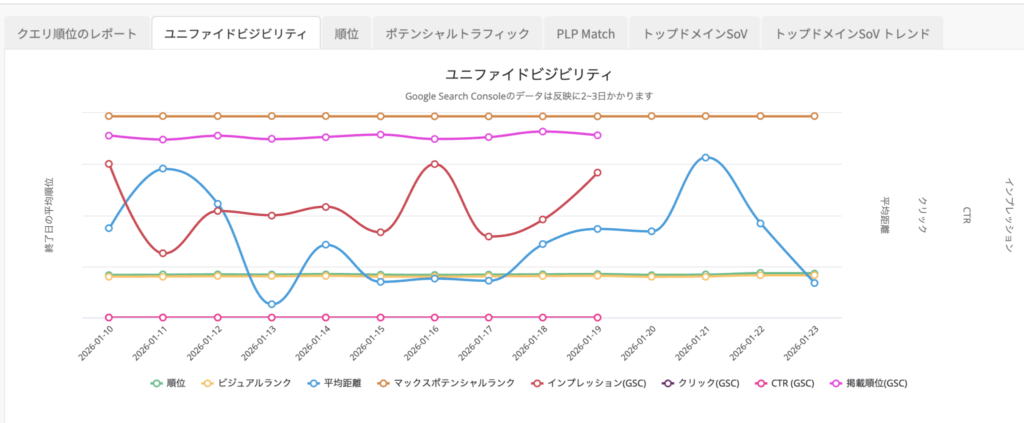
Image: Unified Visibility, available through Google Search Console integration. Mr. Tada values not just rankings but also distance.
When operating across multiple sites with massive query volumes, common challenges include:
- Data is being reviewed but it doesn’t lead to decision-making
- Different team members interpret metrics differently, causing discussions to misalign
On this point, Mr. Tada noted, “The more data you have, the harder it becomes to make decisions unless you first align on ‘what to look at.'”
Therefore, SMS has prioritized defining the minimum set of metrics and screens that can serve as a shared language within the team, rather than tracking all metrics uniformly.
Mr. Sato also reflected, “If you try to build a perfect analytics foundation from the start, operations fall apart. We prioritized creating a state where everyone on the team could see the same landscape first.” Using DemandMetrics custom dashboards in a standardized format is precisely part of this approach.
Once operations were established, they progressively advanced API integration and more sophisticated analysis. “Even if you start simple, it’s important to leave room for expansion when the need arises,” Mr. Tada says.
3. Not Letting DemandMetrics End as Just an Analytics Tool: Deepening Data Integration and Utilization
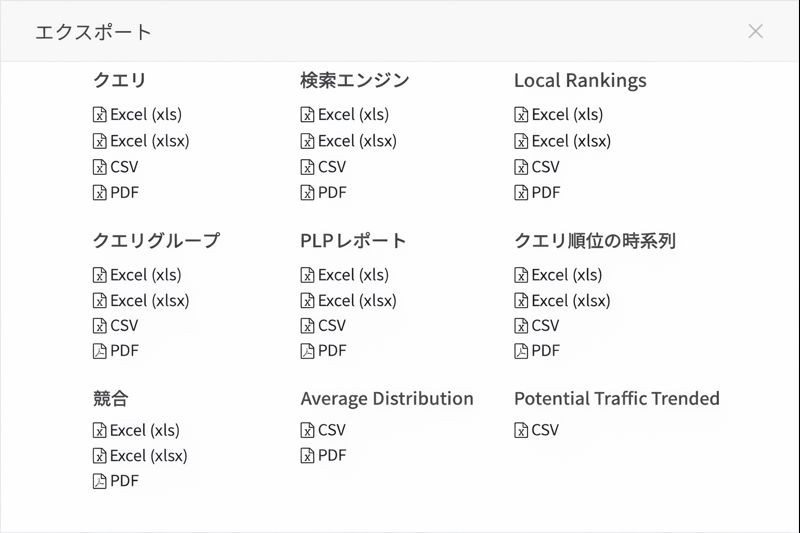
Image: DemandMetrics allows exporting various data
SMS doesn’t treat DemandMetrics as a standalone analytics tool — they integrate data obtained via CSV and API into their internal data infrastructure. Going forward, they plan to cross-analyze this integrated data with first-party data such as job listing counts and conversion figures.
On this background, Mr. Sato and Mr. Tada explained, “Just looking at SEO rankings makes it hard to judge how they’re affecting the business” and “We wanted to be able to explain how changes connect to applications and conversions, rather than just stating that rankings improved.”
By connecting DemandMetrics data with business data, they can now understand “which initiative affected which metric and to what degree” in a multidimensional way. The ability to treat SEO data as material for decision-making directly tied to business outcomes, rather than mere visualization, represents a significant change for them.
For companies that have already adopted DemandMetrics but are only using it for report viewing and ranking checks, this serves as an advanced example of redefining SEO data as “part of business data.”
These efforts reveal that SMS positions SEO not as a one-off initiative, but as data for understanding and improving the entire business. Regardless of role or job function, the approach of using data — starting with DemandMetrics — as a basis for discussion and prioritizing connections to business outcomes appears to be a foundational premise for daily decision-making.
Refining SEO as a Business Foundation for the AI Era: SMS’s Outlook
SMS says it will continue to promote SEO internalization and advancing data utilization as key themes. Among these, Mr. Tada believes that “going forward, building a data infrastructure premised on API integration that enables three-dimensional monitoring by combining various internal data will become increasingly important.”
He further stated, “By creating a state where DemandMetrics data can be reliably obtained and naturally connected with other business data, the scope of analysis expands significantly. Rather than data for checking rankings, we want to increasingly treat it as data usable for business strategy, product strategy, and other decision-making. We plan to build an infrastructure where advertising and SEO can be analyzed as the same thing — in that they both return search results.”
Mr. Sato noted, “With the spread of AI Overviews and generative AI, how search results appear and how users behave is definitely changing. Just tracking rankings as before won’t be sufficient in more and more situations.” Building on this, he says that leveraging the assets SMS has built while considering “what form the exposure takes” and “where we’re making contact with users” — treating channels beyond search engines (SNS, video, events, etc.) as information touchpoints — will become increasingly important.
To respond to changes in search results in the AI era, next-generation data utilization combining business data and SEO data highlights the importance of evolving SEO not as a standalone initiative but as a foundation for deepening user understanding across the entire business.
SMS Co., Ltd. Company Overview
- Company Name: SMS Co., Ltd.
- Founded: April 4, 2003
- Market Information: Tokyo Stock Exchange Prime Market (Securities Code: 2175)
- Employees: Consolidated: 4,528; Non-consolidated: 3,049 (as of March 31, 2025)
- Affiliates: Domestic: 4 companies; Overseas: 16 countries and regions across Asia/Oceania
- Mission: “Improving people’s quality of life and continuing to contribute to society by building information infrastructure suited to an aging society”
- The company identifies the domains required in an aging society as healthcare, nursing care/disability welfare, health care, and senior life, building information infrastructure as a platform connecting end users, practitioners, and businesses, offering 40+ services.
- Website: https://www.bm-sms.co.jp
- Recruitment: https://www.bm-sms.co.jp/recruit/
About DemandMetrics
DemandMetrics is a leading AI search monitoring platform trusted by many large-scale sites. It is highly regarded not only for search ranking monitoring but also for its proprietary technology that analyzes search result pages themselves. With no initial costs and starting at $500/month, you can build a full-fledged AI search marketing workflow.